 |
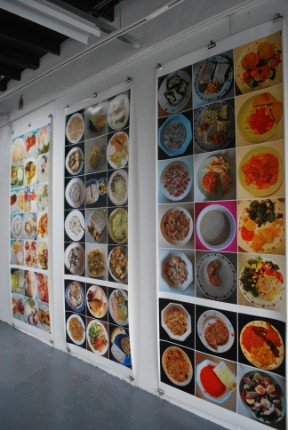
The food we eat can reveal numerous things; our age, our wealth, our location or social status and even record our place in history. Food can be used to bring pleasure to others, to rekindle old memories and to mark celebration. The time taken to cook food is rarely ever recorded and the food will never be remembered. As old photographs somehow stir up feelings for those who have lived before us, and give us a sense of past, if we could somehow see the food they had eaten it would add a whole new dimension to the way we understand their lives to have been. Food is my focus as I explore social documentation in an alternative format; taking the physical person out of the photograph but still gaining entry into their lives. In doing this I also aim to avoid victimising a subject, a large concern within social documentary photography. I use digital SLR photography as I need take a large number of high quality photographs and review them instantly. Within this work, when other family members photograph, they use their own digital cameras. I have documented my meals over a one week period, as have my Mom and Nan; the result is three sets of photographs representing three different generation‘s diet. There is a significant difference between the meals created by me (third generation) and my Grandparents (first generation). The accompanying handout explains my findings from the week. Social documentation and mass observation have strong links with my work. These quotes in particular (‘Camerawork’ 1978, Picton) emphasise areas I am predominantly interested in. ‘How little we know of our next door neighbour and his habits; how little we know of ourselves.’, ‘Mass observation, which aims to be a scientific study of human social behaviour, beginning at home.’, ‘…observers whose role was to watch, listen and document all aspects of ordinary behaviour.’ |
